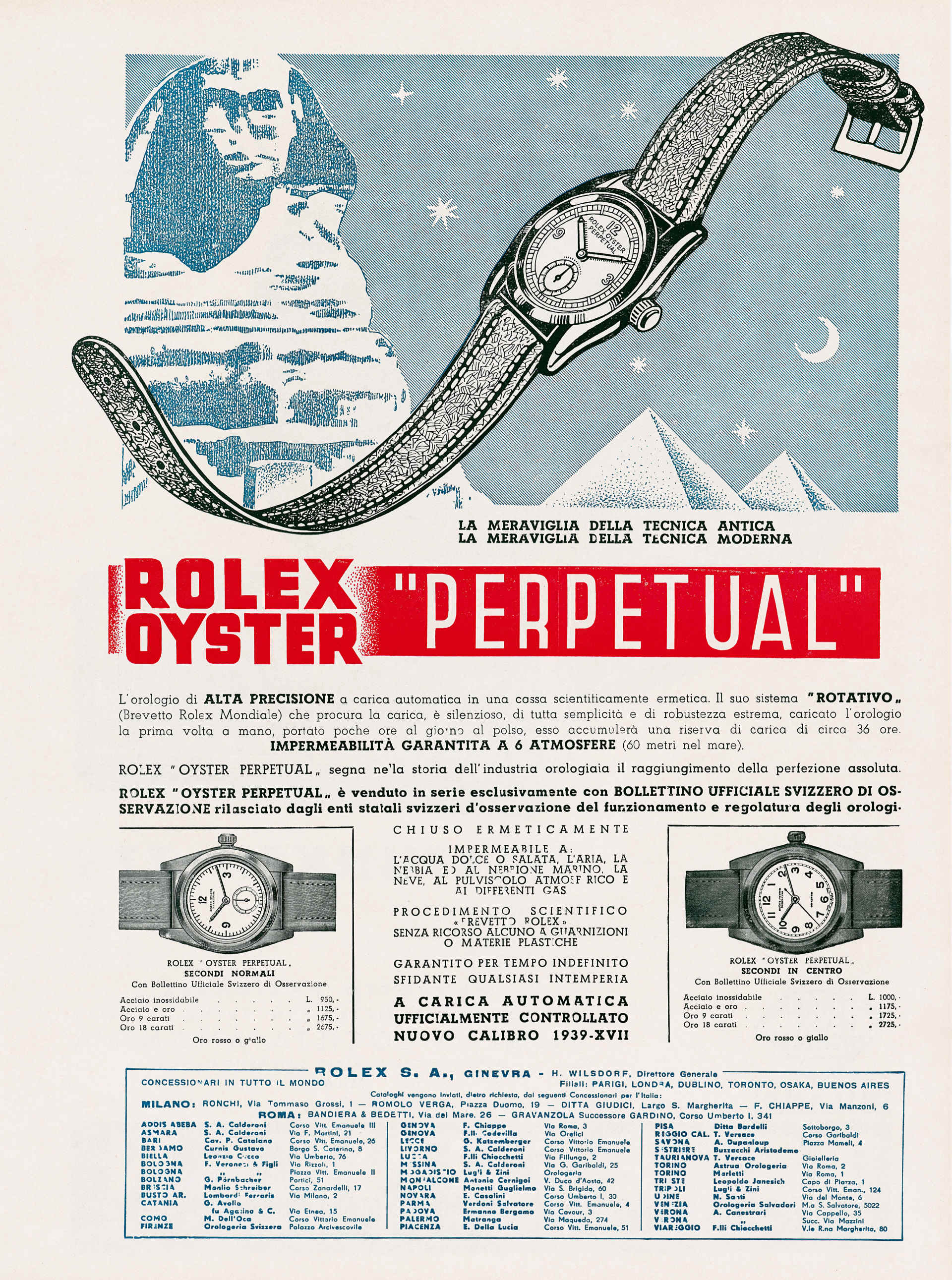
Consequently, the Oyster needed to be wound regularly to supply the energy necessary for it to work. This meant having to unscrew its waterproof winding crown, thereby breaching the barrier between the exterior and the interior of the watch, and allowing humidity and impurities to penetrate.
To complete the Oyster concept and ensure a truly hermetic environment for the movement, a way had to be found to avoid this and for the movement to rewind itself without the help of outside energy. Self-winding had already been brought into pocket watches by eminent watchmakers in the 18th century. In the 1920s, its use had spread to wristwatches, although never very satisfactorily.