


Oyster Perpetual
The fulfilment of a visionA true embodiment of Hans Wilsdorf’s vision, the Oyster Perpetual combines tradition and innovation. With its rich history, consistent technical improvements and purity of its design, it has helped shape the face of the modern wristwatch.


Precision on the wrist
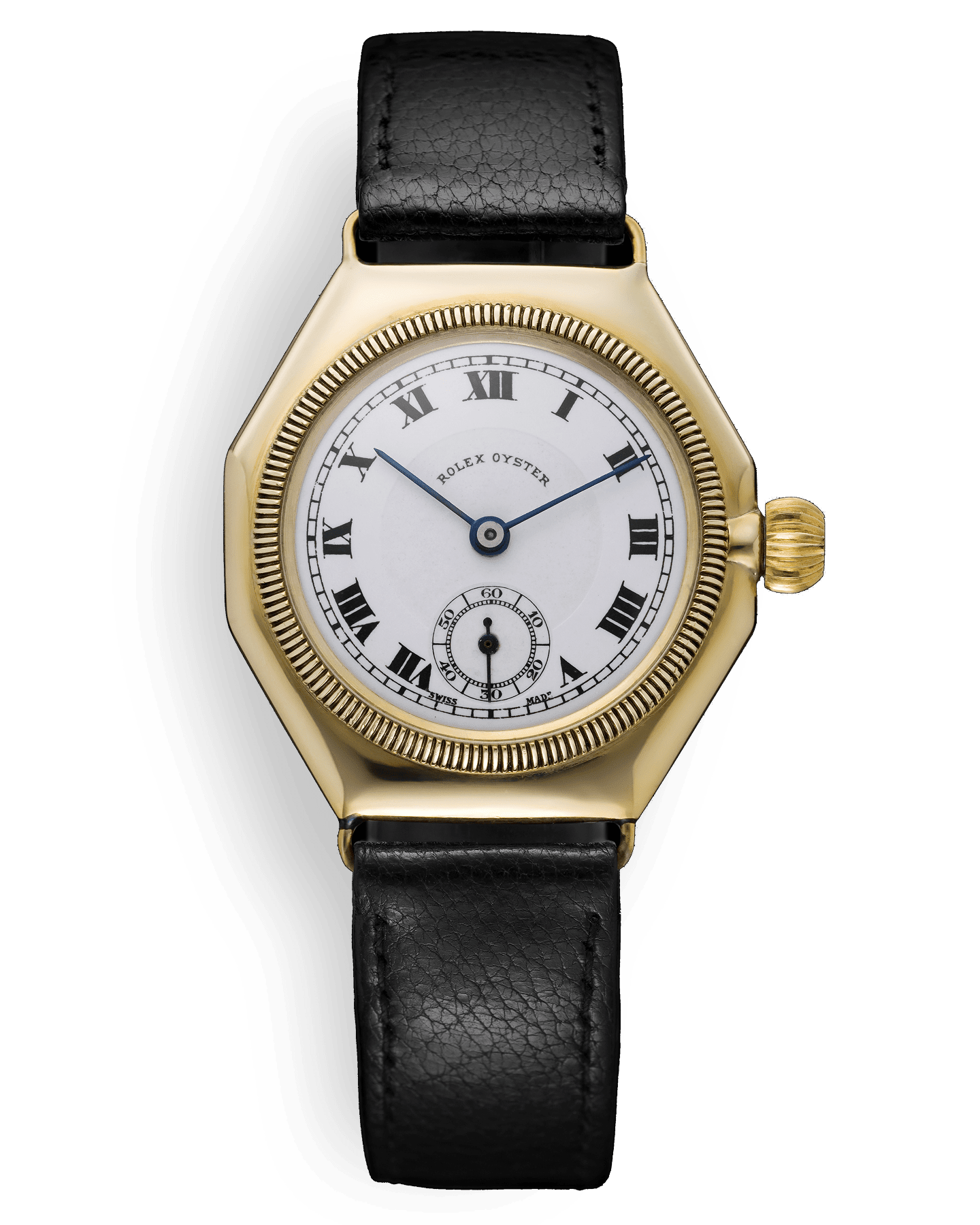
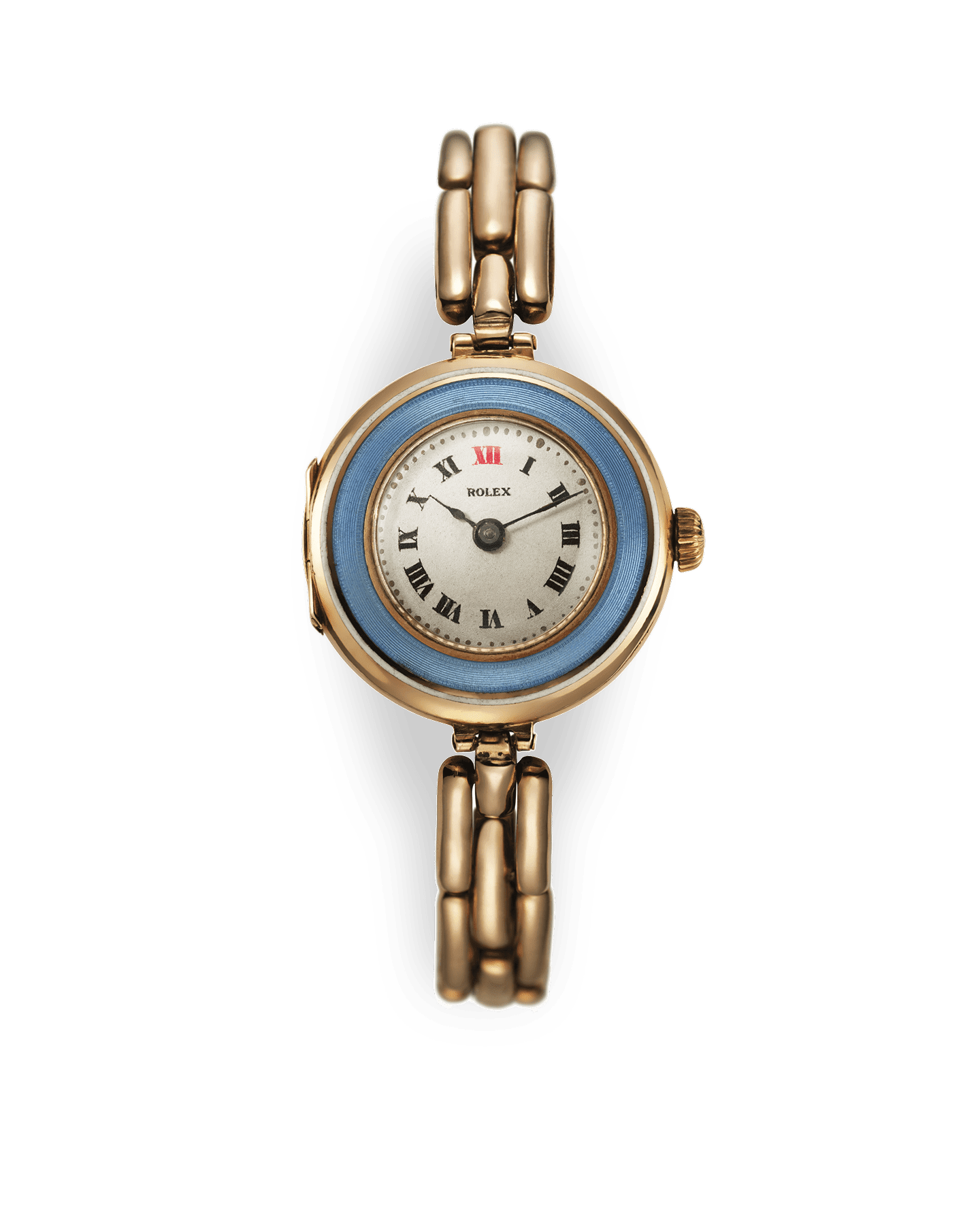
A Rolex wristwatch obtained a chronometer certificate from the Official Watch Rating Centre in Bienne, Switzerland, demonstrating that it matched the precision of pocket watches. In 1914, another Rolex wristwatch received the prestigious ‘Class A’ certificate from the Kew Observatory, a distinction usually reserved for marine chronometers. For the first time, a wristwatch equalled the most precise timekeeping instruments of the era.

1910
The founding milestone
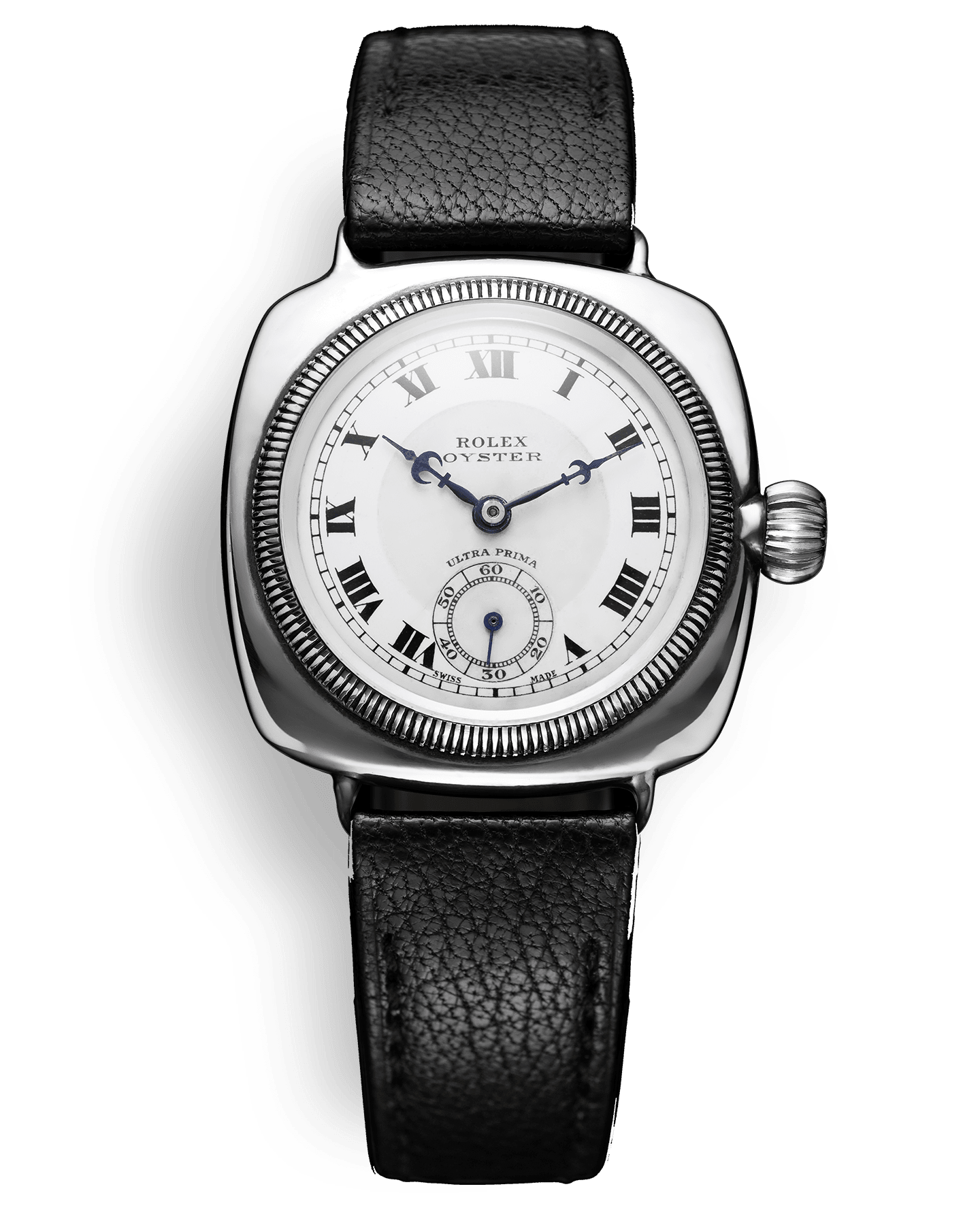
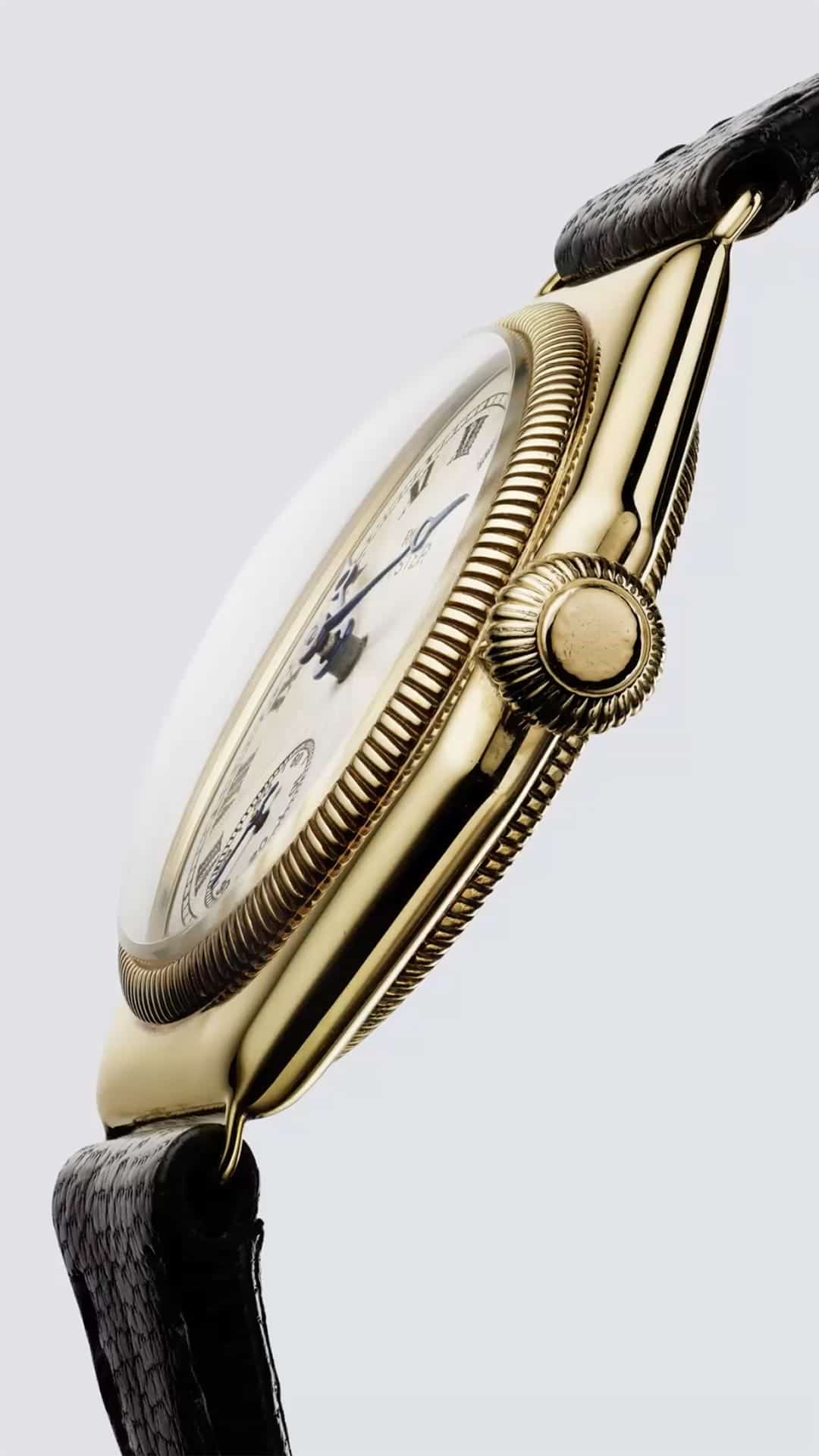
Rolex unveiled the Oyster case, a major milestone in the history of watchmaking. Forming an airtight shell, it protects the movement from water, dust and moisture.
1926

The original feat
Rolex’s founder gave an Oyster watch to Mercedes Gleitze for her swim across the English Channel. The English swimmer later wrote to Hans Wilsdorf, saying:
The reason I wear a Rolex Oyster wristwatch when swimming is because it is the only watch I know that is absolutely waterproof and also immune to damage from sand or salt air.

1927
Perpetual rotor
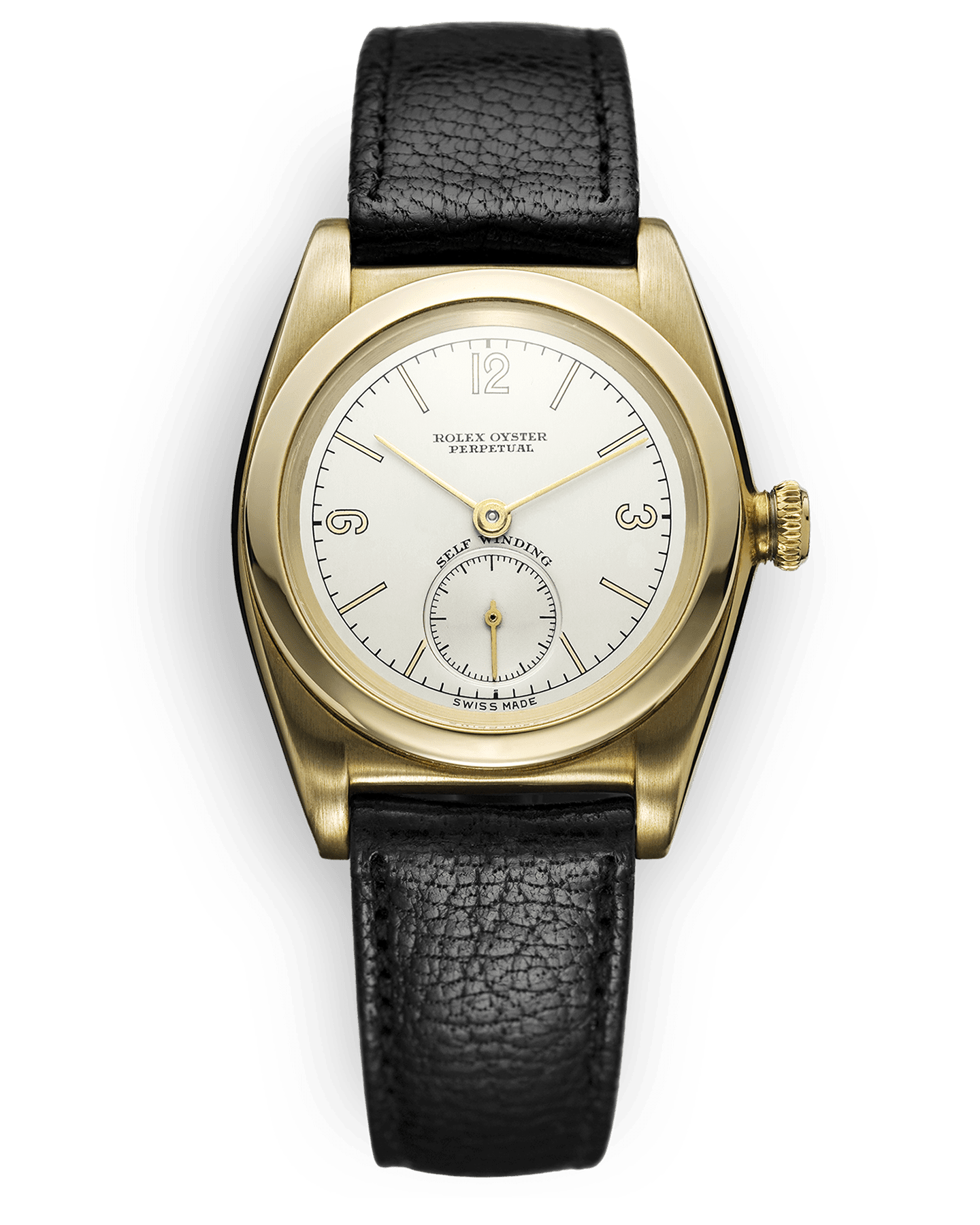
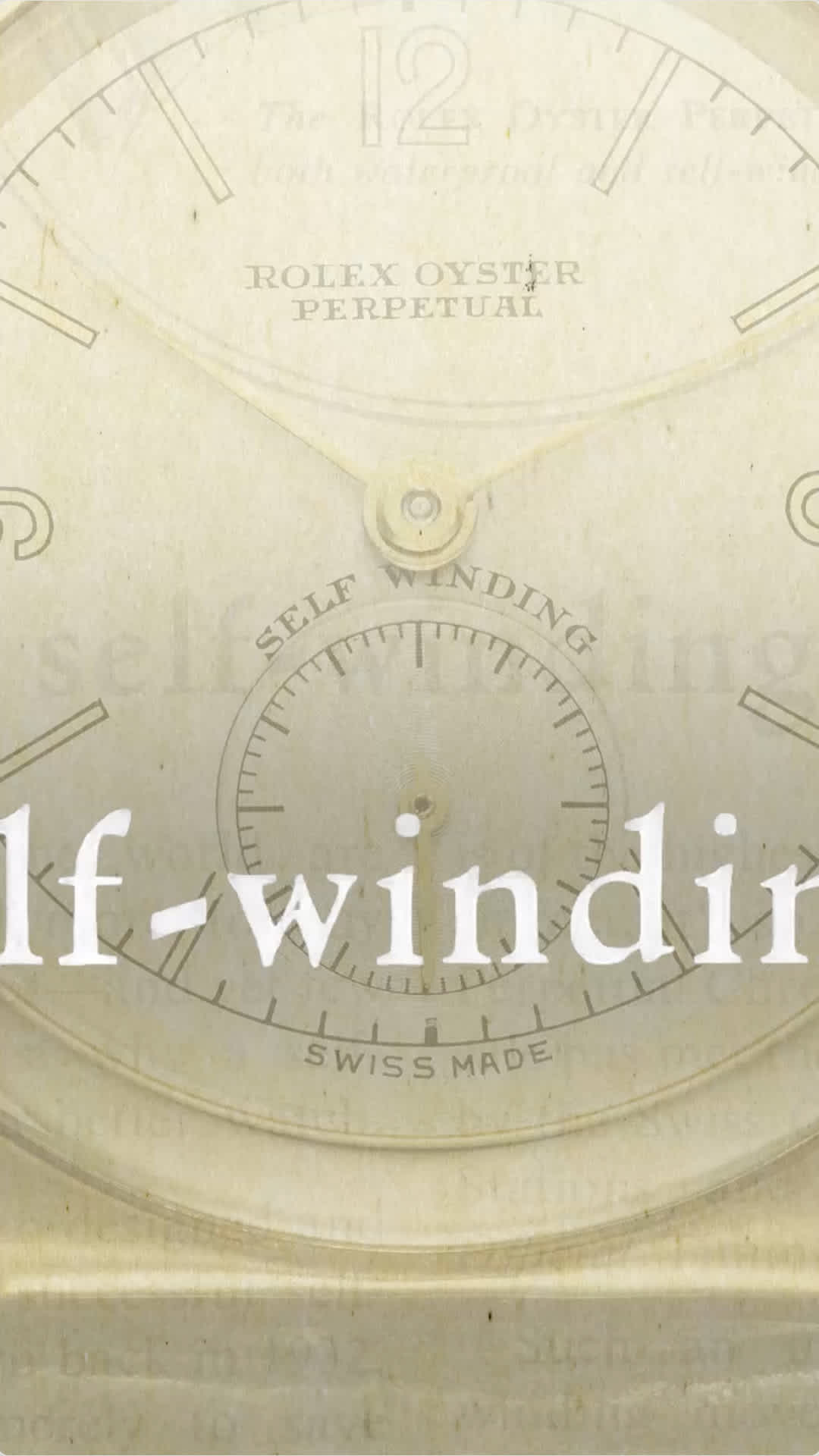
Rolex patented the Perpetual rotor, a system that allows the mechanical movement to wind itself automatically using the natural movements of the wrist. The combination of the Oyster case and the Perpetual rotor gave rise to the concept of the Oyster Perpetual. Engraved on the dial, it denotes both the watch’s waterproofness and autonomy.
1931
On top of the world
Sir Edmund Hillary and Tenzing Norgay Sherpa became the first men to reach the summit of Mount Everest. At an altitude of over 8,800 metres, in the cold and in the face of oxygen deprivation and thermal shock, both explorers and instruments were put to the test. Among the British Everest Expedition’s equipment were Oyster Perpetual watches.

Rolex Oyster watches performed splendidly, and we have indeed come to look upon Rolex Oysters as an important part of high-climbing equipment.
1953

An iconic alloy
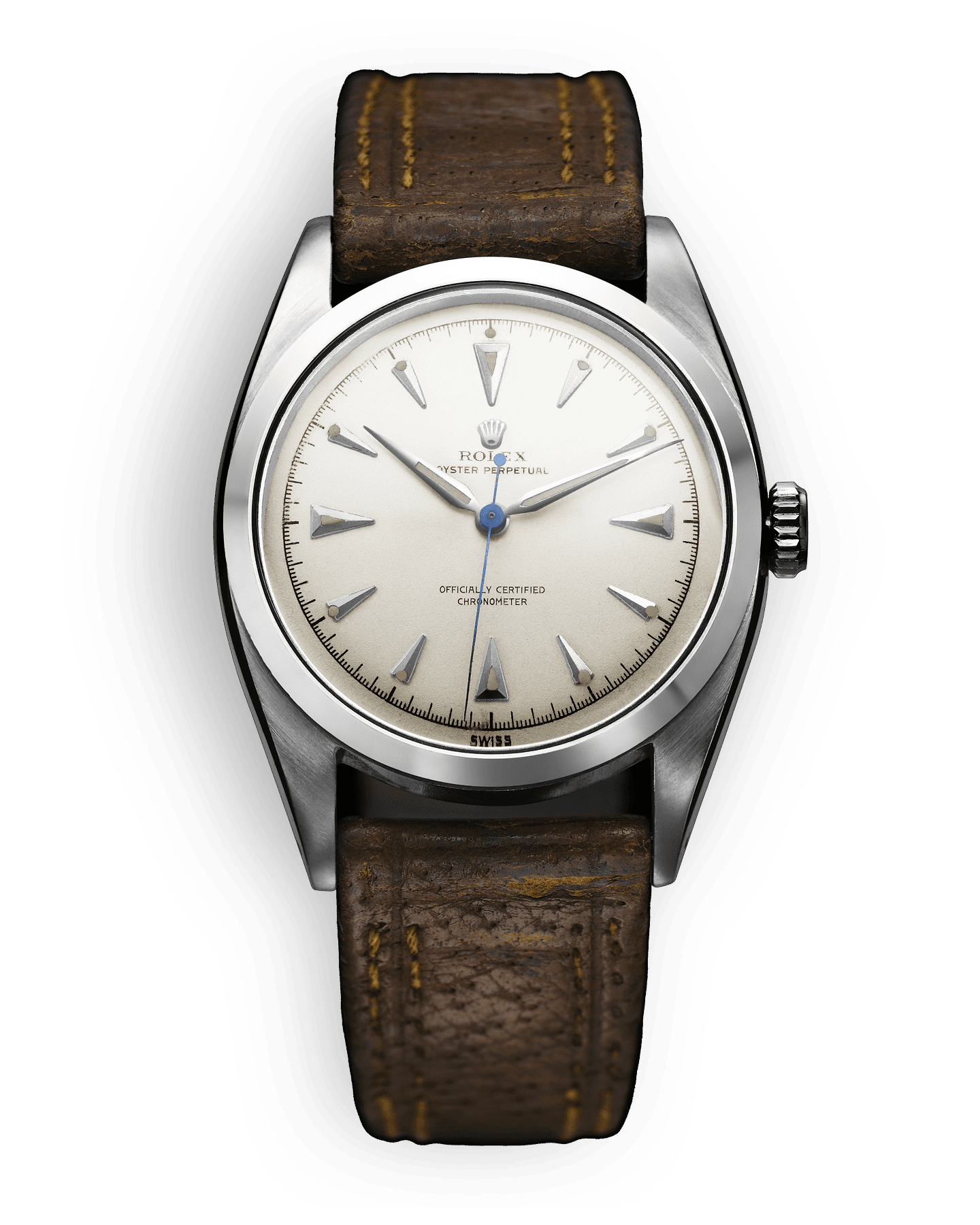
Rolex became the first watchmaking brand to use solid blocks of 904L steel for some of its cases. Renowned for its resistance to corrosion, this uncompromising alloy enhanced the robustness and durability of the watches. It later established itself as the emblematic alloy of the Oyster Perpetual range.
1985

The birth of a range
A range called the ‘Oyster Perpetual’ made its debut in the brand’s catalogue. Precise, waterproof and self-winding, Oyster Perpetual watches carry the legacy of the original Oyster and epitomize the essence of the brand’s know-how.
2014
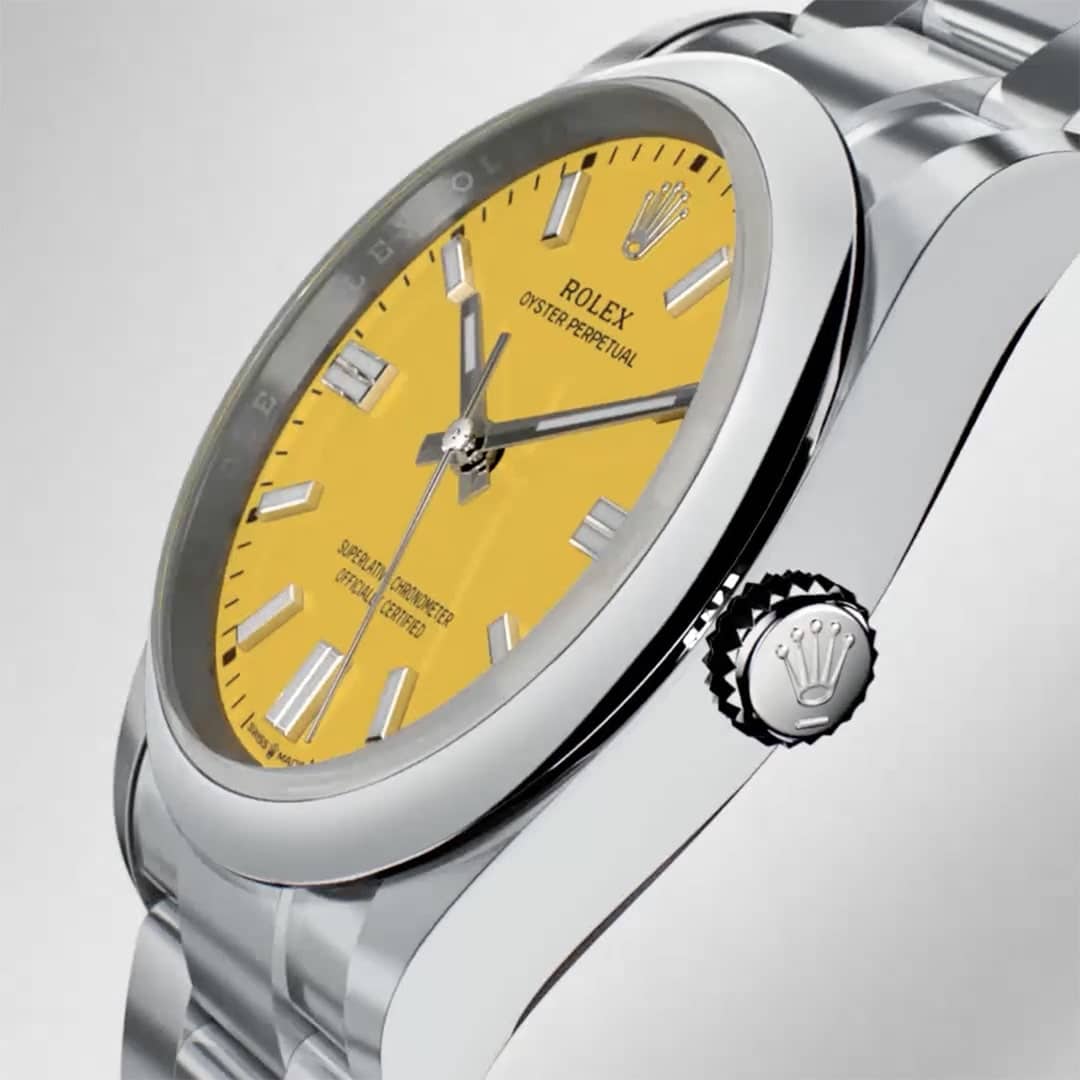
Pop colours
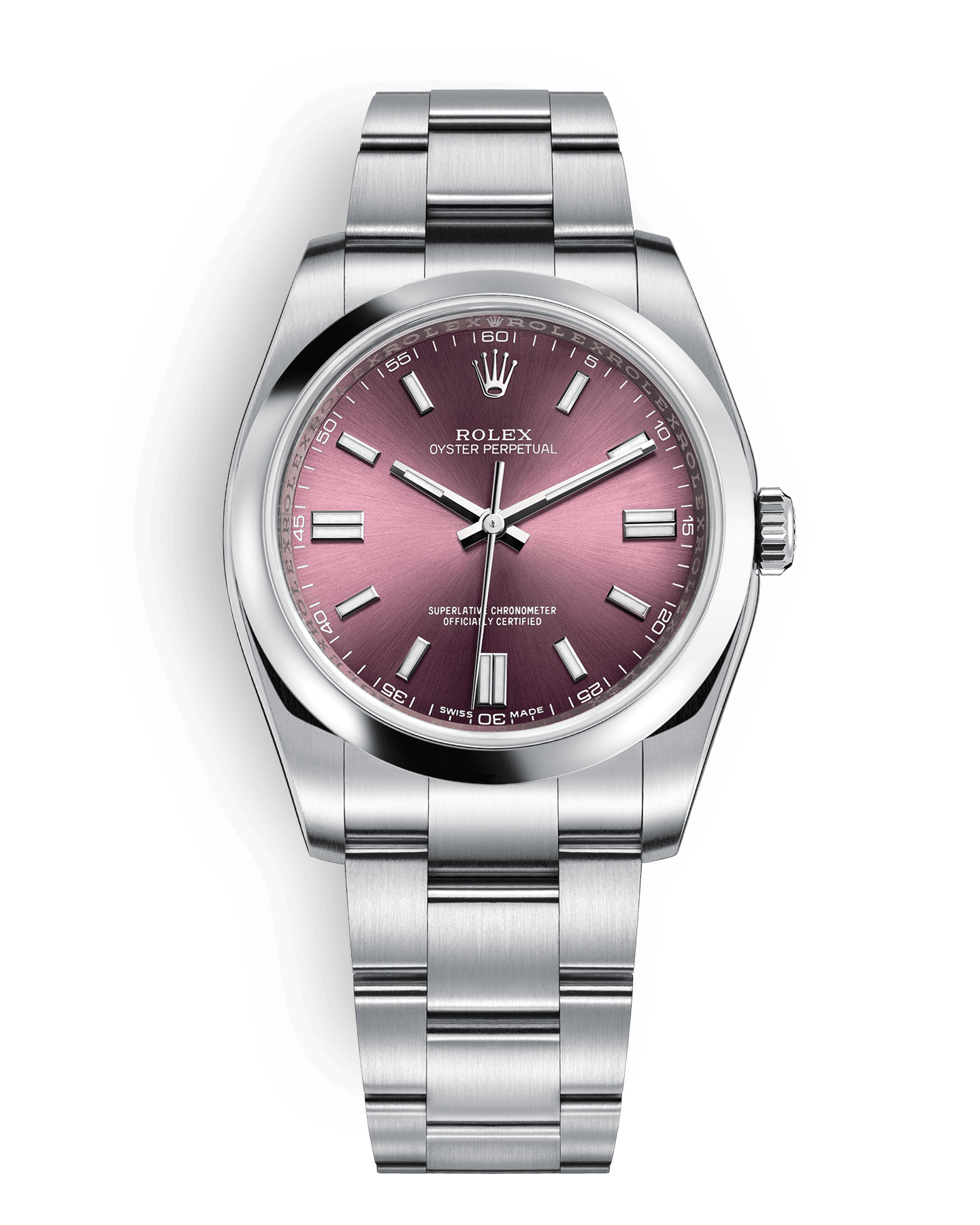
Rolex introduced a series of dials in vivid colours to the Oyster Perpetual – candy pink, turquoise blue, yellow, coral red and green – bringing a contemporary touch to the range. In 2023, this novelty continued with new versions characterized by a decidedly graphic lacquered ‘Celebration’ dial, featuring bubbles combining these five colours.
2020

One hundred years of the Oyster
A special edition of the Oyster Perpetual in a yellow Rolesor variant, available in 31 mm, 36 mm and 41 mm, was unveiled to mark the occasion of the 100th anniversary of the Oyster. Several details expressly evoke the centenary: the number 100 on the winding crown and, on the dial, ‘100 years’ replaces ‘Swiss Made’ at 6 o’clock. On the slate dial, the name ‘Rolex’ and the small pad-printed squares on the minute track appear in green, an iconic colour for the brand.
